


Asking anyone who has just spent six weeks running from a hotel room to an office in New York is guaranteed to give the same answer; living in your suitcase does get old really quickly. For the first few days, everything feels just like a mini-holiday. But by the second week, you can’t take the same little bathroom anymore, the $18 room service omelette, or having nowhere to sit but the edge of the bed.
So when project timelines stretch into months instead of days, a lot of companies (and a lot of exhausted employees) start looking at other options. Again and again, corporate housing in New York City shows up in that search. Is it just another way of saying the same thing about hotels, or does it stand on its own?
Here’s an honest look at it.
What corporate housing actually is
Strip away the marketing language, and corporate housing is really just a furnished apartment rented for a longer stretch of time – usually a few weeks to a few months – meant for people who are in a city for work, not vacation. You get a bedroom that’s actually a separate room, a kitchen you can use, a couch, sometimes laundry in the unit. Basically the stuff a hotel skips because it assumes you’re only staying two nights.
Planurstay works specifically in this space around New York City, helping travelers and companies find apartments that match how long they’re staying, where they need to be, and what they’re comfortable spending.
Does it actually save money?
This is normally the first question that comes up, and the truth is, “it depends,” but if your stay will be extended, then yes, it does.
Hotels are priced for short stays, so the nightly rate stays high no matter how many nights you book. Add resort fees, parking, and eating out for every single meal because there’s no kitchen, and a 60-day hotel stay turns into a surprisingly large number on the expense report.
Corporate housing is usually priced by the month instead of the night, and that alone tends to bring the daily cost down. There’s also that thing which no one tends to calculate, saving money when you cook at least half of your meals rather than order from the street. It’s not a dramatic difference on night one. It’s a noticeable one by night forty-five.
The space thing matters more than people expect
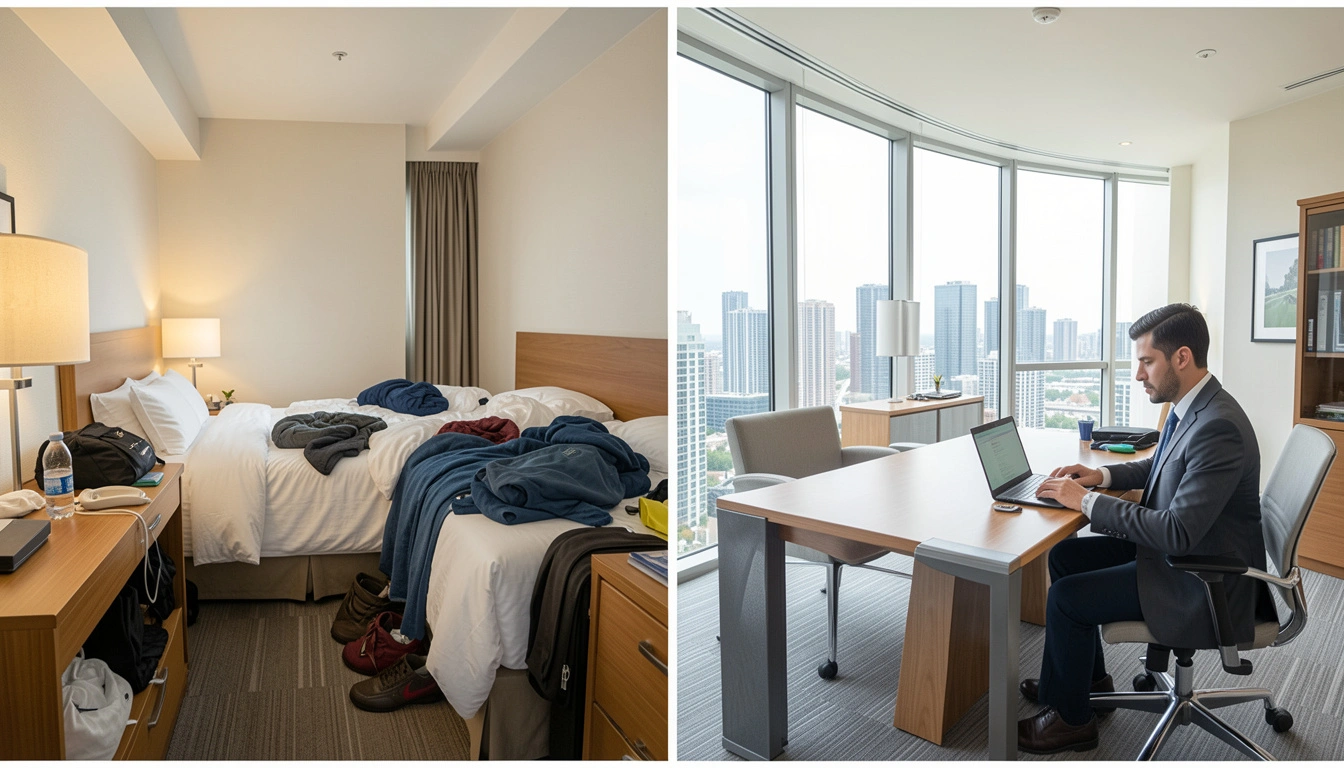
Nobody really thinks about square footage until they’re stuck in 300 of them for six weeks straight. A hotel room is built for sleeping and showering, not living. Corporate housing gives you an actual living room, a kitchen counter to put your laptop on that isn’t also your bed, and enough space that you’re not tripping over your own suitcase every morning.
It sounds like a small thing until you’re the one living it. Having the freedom to enjoy a cup of coffee according to your preferences, washing a load of clothes without having to leave the complex, or simply sitting somewhere else apart from the bed, all this matters a great deal when on the road for a while.
Picking the right neighborhood
New York isn’t one city, it’s a dozen smaller ones stitched together, and where you land changes everything about the trip. Midtown puts you close to a lot of offices but comes with the noise and pace that goes with it. Somewhere like the Upper West Side is quieter, a bit more residential, better for actually decompressing after work.
Excellent housing companies offer you options in these communities rather than forcing you to accept anything that is close to your place of work. The value of such choices should not be underestimated.
Privacy, and why it helps with actual work
Long journeys generally involve late night calls, deadlines that do not take a vacation simply because you are on one, and at times, simply closing a door. This is possible when staying in an apartment, but not in a hotel where there are a lot of people around. No one banging on the door for housekeeping mid-call, no thin walls, no hallway noise at 11pm. For anyone doing serious work while traveling, that privacy isn’t a nice extra – it’s the difference between a productive trip and a distracted one.
So, is it worth it?
For a two-night trip, no, don’t bother. For anything past two or three weeks, corporate housing tends to win on cost, comfort, and sanity. Consultants on long assignments, employees relocating for a few months, project teams sent to the city together – these are the situations where it makes the most sense.
Planurstay handles the legwork of finding the right place, so the trip itself doesn’t become its own project on top of the work you actually came here to do.
Frequently Asked Questions
How long should a trip be before corporate housing makes sense?
Somewhere around the two-to-three-week mark is usually where it starts paying off, both financially and comfort-wise.
Is it actually cheaper than a hotel?
For a short stay, not always. For anything longer than a few weeks, it usually works out cheaper once you factor in the monthly rate and cooking your own meals.
Do these apartments come furnished?
Yes – furniture, kitchen basics, linens, utilities are typically all included, so you’re not buying anything just to survive the stay.
Can Planurstay help with a specific neighborhood?
Yes, that’s a big part of what they do – matching people to areas that fit their office location and how they like to live.
Is this only useful for solo travelers?
Not at all. Plenty of companies use it for whole teams sent out on the same project, not just individuals.
.
Ready for a Better Business Stay in New York City?
Skip the cramped hotel room and enjoy the comfort of a fully furnished corporate apartment. Experience flexible stays, modern amenities, private living spaces, and convenient locations designed for business travelers and extended stays.