
Hotels are built for short stays.
Let’s be fair. Hotels are designed for convenience. Quick check-in. Quick check-out. Everything is compact. Everything is efficient. That works perfectly for short trips. But after a week, the room feels smaller. Your suitcase stays half open. Your clothes never quite settle. You’re consuming more than you want to. You’re working from a desk that barely fits your laptop. You begin to feel temporary. That’s the word. Temporary.Apartments feel more grounded.
Now picture this. You walk into a real living room. A separate bedroom. A kitchen that isn’t hidden in the return of a minibar. A dining table where you can actually sit comfortably. That’s what furnished apartments in Toronto Canada for rent offer. You unpack properly. You organize your things. You buy groceries. You cook something simple one evening because you’re tired of restaurant food. It feels normal. And when you’re in Toronto, one of Canada’s most dynamic cities, normal feels good.The kitchen changes your daily rhythm.
People usually talk about saving money when they mention kitchens. Yes, that’s part of it. Toronto dining adds up quickly. But the bigger benefit is control. You wake up. Make coffee your way. Have breakfast without waiting for elevators or delivery apps. Eat when you’re hungry. Not when a restaurant is available. A fully furnished apartment for rent in Toronto gives you that independence. It’s a small shift. But over time, it changes how your days feel.Work and rest need separation.
If you’re staying for business, this matters even more. Working from a hotel room often means your desk is next to your bed. You finish a call, turn around, and there’s nowhere else to go. There’s no real boundary. In an apartment, you close your laptop and move to another room. Sit on a couch. Cook dinner. Step onto a balcony. Your brain understands the shift. That separation protects your energy. Professionals who use furnished apartments in New York City often say the same thing. Once they experience apartment-style living during assignments, hotel rooms feel restrictive. Not bad. Just limiting.Privacy feels different.
Hotels are busy by nature. Hallways echo. Doors close. Elevators run constantly. Cleaning carts roll by early in the morning. Apartments feel quieter. More residential. You’re not surrounded by travelers coming and going every day. You’re part of a neighborhood. And Toronto is a city built on neighborhoods. Staying in an apartment lets you experience that. Local cafés. Grocery stores. Parks. Transit routes. You begin to feel connected instead of just passing through.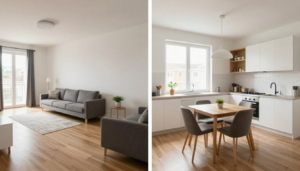
The financial side over longer stays
Let’s talk honestly about money. Hotel pricing looks simple at first. Nightly rate. Done. But then there are taxes. Service fees. Daily meals. Laundry services. Parking charges. Stretch that over 30 days. Now compare it with an apartment where utilities are included. Internet is set up. Laundry is available. A kitchen reduces dining expenses. For extended stays, furnished apartments for rent in Toronto, Canada, often make more financial sense. It’s not about being cheap. It’s about value.Emotional comfort matters more than we admit.
This part rarely shows up in brochures. Extended stays can feel isolating. Even in a lively city. In a hotel, every day feels similar. Same room. Same hallway. Same lobby. In an apartment, you create small routines. You arrange your workspace. You pick a favorite chair. You find your neighborhood grocery store. Those little habits build stability. And stability reduces stress. When stress is lower, your focus improves. Your sleep improves. Your mood improves. That affects everything.Flexibility without commitment
Some people worry that renting an apartment means signing long leases. That’s not the case with short-term furnished options. Most providers offer flexible monthly arrangements. No heavy paperwork. No year-long contracts. You get the comfort of a home without long-term pressure. That balance is ideal for:- Corporate assignments
- Relocation periods
- Remote work transitions
- Temporary projects
- Extended family visits
When hotels still make sense
To be clear, hotels are not the enemy. For two or three nights, they’re perfect. You don’t need a kitchen. You don’t need extra space. You’re barely in the room anyway. But once your stay moves past a week or two, your needs change. You’re not just visiting anymore. You’re living. And living requires a different setup.The real difference
Here’s what it comes down to. Hotels support travel. Apartments support daily life. If your time in Toronto is brief, travel support is enough. If your time is extended, daily life support becomes essential. That’s why furnished apartments for rent in Toronto, Canada, are often the smarter option for longer stays. It’s not about luxury. It’s about function, comfort, and balance. And those things matter more than people expect.FAQs
What are furnished apartments in Toronto Canada for rent?
Furnished apartments in Toronto, Canada, for rent are move-in-ready residential units that include furniture, kitchen appliances, utilities, and internet. They are designed for short or extended stays without requiring tenants to set up services or purchase household items.Are furnished apartments cheaper than hotels in Toronto?
For longer stays, furnished apartments are often more cost-effective than hotels. Guests save on daily dining, laundry services, and additional fees while gaining more space and included utilities, making monthly costs more predictable.What are the minimum and maximum rental periods for a furnished apartment in Toronto?
Most furnished apartments are available for flexible monthly stays, typically starting from a few weeks up to several months. Terms depend on availability and provider policies but are designed for temporary housing needs.What is included in a fully furnished apartment for rent in Toronto?
A fully furnished apartment for rent in Toronto usually includes beds, sofas, kitchen appliances, cookware, linens, Wi-Fi, utilities, and essential household items, allowing tenants to move in immediately without extra setup.Who should choose furnished apartments instead of hotels?
Business travelers, relocating professionals, remote workers, and families staying longer than a week benefit most. Anyone needing space, privacy, and routine typically prefers furnished apartments over hotel rooms.Conclusion
Hotels are convenient for short trips. But when your stay extends beyond a few days, comfort, privacy, and daily stability matter more. That’s where furnished apartments in Toronto make the difference. They offer the space to live, not just sleep. The flexibility to settle in. And the balance between productivity and rest that extended stays require. planURstay provides carefully selected furnished apartments designed for comfort, flexibility, and peace of mind. We Also Offer Furnished Apartments in Other Major Cities In addition to Toronto, we also provide furnished apartment options in: Wherever your extended stay takes you, planURstay helps you settle in comfortably and live with confidence.Stay Longer. Live Better in Toronto.
Choose furnished apartments in Toronto Canada for rent with PlanURStay and enjoy more space, privacy, and flexibility than hotels. Perfect for extended stays, business travel, and relocation.